
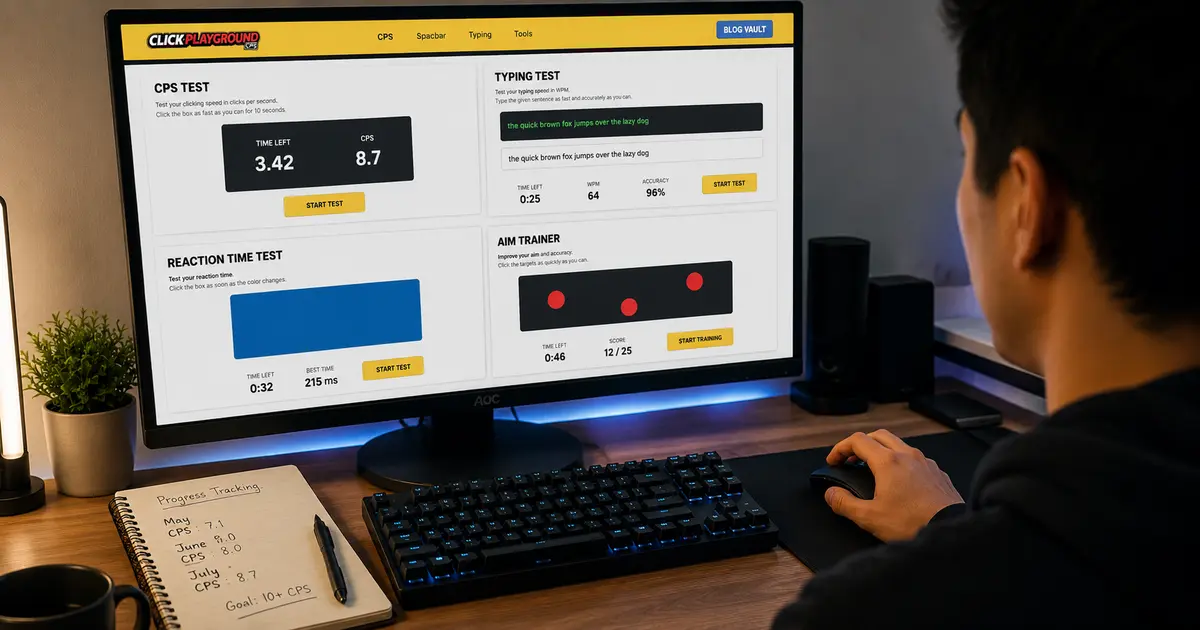
Many people test click speed, typing speed, reaction time, or aim performance every day. Collecting numbers is easy. Understanding what those numbers mean over time is much harder.
This guide explains how to track skill improvement with clear habits—not hype scores, not feature tours. Click Playground is a set of benchmarks; the value is in how you read trends across them.
If you have ever wondered whether you are actually getting better, you are asking the right question. Long-term improvement rarely looks like one new personal record.
Why tracking matters
Without performance tracking, memory lies. You remember the peak run and forget the sloppy ones. You feel worse after a bad day and forget three calm weeks.
Tracking habits turn random tests into feedback: what improved, what stalled, what only felt good. That is skill development you can repeat—not luck you cannot explain.
Why consistency matters more than raw skill is the mindset: measure what you can repeat, not what happened once.
The problem with single scores
A single score is a snapshot—sleep, mood, warmup, luck. Treating every individual test as definitive skill is how improvement becomes frustrating.
Avoid obsession with personal records. Celebrate peaks briefly, then return to medians. Records are useful signals; they are terrible bosses.
What matters more, averages or records? Averages, medians, and spread between best and worst runs. That is meaningful progress you can trust.
| Metric | Better tracking method |
|---|---|
| CPS | Average or median over time |
| WPM | Consistency and accuracy together |
| Reaction time | Long-term trend, legitimate runs |
| Aim performance | Repeated practice results on named drills |
Understanding trends
Performance trends are slow. Week one to week four on the same setup tells more than hour one to hour two on a new mouse.
How do I know if I'm improving? Medians drift, disaster runs shrink, and the same mistake type appears less often in notes—even when today's number looks flat.
Realistic expectations: modest weekly movement beats fantasy jumps. Gaming improvement and typing improvement both reward patience.
Measuring consistency
Measuring consistency means logging several runs per session and caring about spread—not only the top line.
Should I record every score? No. Three to five honest attempts after warmup, then stop. How often should I test myself? Enough to see a trend—often short daily touchpoints plus a weekly review.
Practice more or practice better when volume rises but trends flat: quality and naming beat endless retests.
Tracking click speed
Pick one primary window—many players use a five-second CPS test for quick checks. Keep duration fixed so comparisons mean something.
Minecraft-style burst clicking? Log separately on a jitter click test or Kohi click test so technique changes do not blur your main trend.
Measure click speed on a fixed CPS window and log medians weeklyWhen medians stall, read why your CPS improvement has stalled—often habits, not a broken tool.
Tracking typing performance
Typing improvement needs WPM and accuracy together. A fast run full of errors is not progress—it is a trap.
Use the main typing test for variety; use a 1 minute typing test when you want a standard length for weekly logs.
Track typing performance with WPM and accuracy on real passagesWhy your WPM is not improving when accuracy cleaned up first—hidden progress before headline WPM moves.
Tracking reaction time
Reaction time improvement is noisy. Same rules every session: legitimate clicks, no spam restarts, note false starts separately.
Test reaction speed on the reaction time test at a similar time of day when you can. Compare monthly medians, not hourly drama.
Build a long-term reaction time trend with honest runsCan you improve reaction time for what realistic timelines look like—trends, not miracle days.
Tracking aim improvement
Aim training progress needs named drills—flick stops, tracking lanes, whatever you repeat. Vague “I played aim trainer” logs teach little.
Use the aim trainer with one goal per block. Write median feel: overshoot left, calm stops, rushed clicks—words matter when numbers are subjective.
Evaluate aiming performance with repeatable drills and short notesSeparate burst-click benchmarks from your main CPS trendLog Kohi-style runs when that mode matches your gameBuilding better tracking habits
A simple weekly template: tool name, duration, median, worst run, one observation. One notebook row beats a forgotten history tab.
Cross-skill view helps. Click speed, typing, reaction, and aim do not have to move together—track each trend on its own terms.
How should I track improvement across Click Playground? Same rules, same lengths, medians over time, stop chasing records, pair benchmarks with practice more or practice better structure.
Tests give you numbers. Habits give those numbers meaning.
Use testing tools to see performance trends—not to grade your worth in one click. Focus on long-term improvement, healthier habits, and setups you can repeat tomorrow.
FAQ
How should I track improvement?
Same tool, same duration, weekly medians and worst runs, one line of notes. Compare trends to your past self—not to a single record or someone else's clip.
Should I record every score?
No. Log a small sample after focused sessions—enough to see spread, not enough to obsess. Quality sessions with a few logged runs beat fifty mindless attempts.
What matters more, averages or records?
Averages and medians for honest skill level. Records are weather; medians are climate. Performance tracking should reward climate.
How often should I test myself?
Often enough to notice trends—many people do short checks most days and a weekly review. Avoid marathon testing that trains fatigue and tilt.
How do I know if I'm improving?
Medians move the right way, worst runs get less disastrous, and match habits feel calmer—not one green number on a lucky afternoon.