
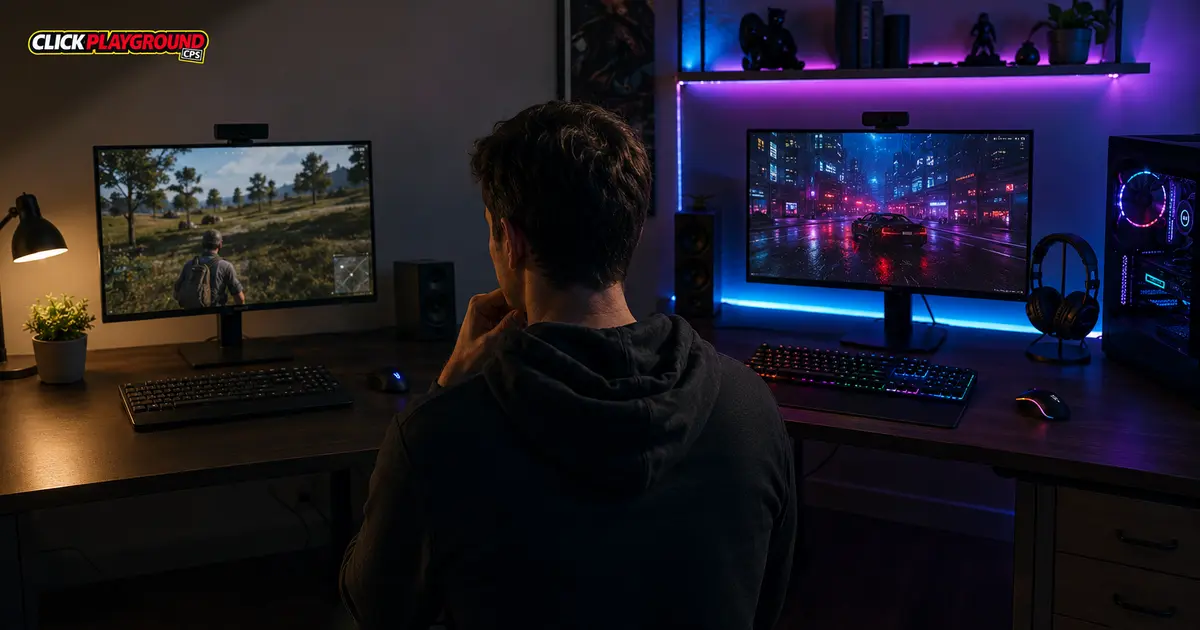
A player upgrades their monitor, mouse, keyboard, and headset. The gaming setup feels better immediately—smoother, sharper, quieter, more comfortable.
The bigger question is whether those improvements actually translate into better performance over time. Can a better gaming setup make you better? Sometimes yes, often partly, and never without the habits that turn comfort into skill.
Two camps show up in every thread. Group one: hardware does not matter. Group two: hardware is everything. Both views are incomplete. This article is the balanced map—no product picks, no affiliate guide, no pretending gear is useless or magic.
Why players upgrade their setup
Upgrades follow frustration. Rank stalls, aim feels muddy, wrists hurt, you cannot read motion on screen. Gaming equipment promises a fix with a credit card.
Will a better setup improve my performance? is a fair question. Am I being limited by my equipment? sometimes yes—when something clearly fails. Often the limit is practice quality, not the price tag.
I've definitely bought hope in a box and felt great on day one. Week three told the truth: either habits improved or only comfort did.
What hardware can improve
Genuine hardware benefits usually show up as comfort, visual clarity, input reliability, and confidence—not instant rank.
Comfort: shape that fits your grip, keys that do not hurt, a chair height that lets you play without cramping. Longer calm sessions mean more learning per week.
Visual clarity: panels and settings that let you track motion. Does monitor refresh rate actually improve gaming performance when Hz helps you see fights—not when FPS never matches the panel.
Input reliability: sensors that do not spin out, switches that do not double-fire, stable sensitivity. Does mouse sensitivity matter more than mouse quality when settings and build work together.
Weight and feel: does mouse weight matter for gaming performance when grams change stops and fatigue—not when you expect grams to replace drills.
| Factor | Influence on performance |
|---|---|
| Comfort | Significant |
| Consistency | Significant |
| Practice habits | Major |
| Hardware quality | Moderate |
| Long-term skill development | Major |
What hardware cannot improve
Hardware cannot improve game sense, discipline under pressure, or review habits. It cannot fix panic peeks, lazy crosshair placement, or skipping warmup.
Gaming improvement from shopping alone plateaus fast. You feel better; medians barely move because the same mistakes repeat on nicer gear.
Can hardware replace practice? No. Hardware supports performance but does not replace skill. Competitive gaming still rewards what you repeat when stressed.
Evaluate your performance in named aim drills on a stable setupComfort and consistency
Comfort and consistency overlap. A setup you can use daily beats a dream desk you avoid because something hurts.
Why consistency matters more than raw skill applies to benchmarks and matches: medians, not one hero session on new gear.
Track consistency across tools. A typing test for rhythm and accuracy, a CPS test for click medians, a reaction time test for legitimate runs—same rules weekly.
Track consistency with WPM and accuracy on a familiar layoutMeasure click speed with medians after setup changesTest reaction speed with honest rules—not gear hypeConfidence and familiarity
Confidence is underrated. When your mouse does not surprise you and your monitor does not strain your eyes, you commit to fights calmer. Calm is a performance stat.
Familiarity beats constant swaps. Adaptation needs weeks on one mapping—sens, shape, pad, key layout. Weekend setup tourism resets muscle memory while feeling productive.
Aim performance grows on a base you trust. Evaluate your performance after changes with patience, not one ranked game.
Common upgrade mistakes
Common upgrade mistakes: changing three things at once, copying pro settings without their grip, buying Hz your GPU cannot feed, ignoring desk ergonomics, expecting rank jumps in 48 hours.
Do I need expensive gear? Only when cheap gear clearly blocks you—pain, skip, unreadable motion. Otherwise money often buys diminishing returns before habits max out.
Practice more or practice better when hours rise but skill does not: volume without structure looks like a setup problem when it is a learning problem.
How hardware affects skill over time
Long-term skill development is mostly drills, review, and realistic expectations. Hardware removes friction so those can happen—better lighting, less pain, clearer targets.
Hardware limitations are real. Bad sensors, broken keys, and eye strain cap growth. So do bad sleep and zero named practice goals.
Gaming performance is a stack: health, habits, setup, then fine-tuning. Skipping the bottom layers while buying the top is why upgrades disappoint.
Building a better gaming environment
A better gaming environment is not only gear. Lighting that does not glare, a desk at the right height, cables that do not fight your mouse pad, breaks that prevent fatigue.
Make smarter upgrade decisions: list one problem, match one fix, log benchmarks for two weeks. If medians move, keep it. If only mood moved, be honest.
Focus on long-term performance improvement, not opening-box dopamine. The setup should disappear into the background so practice stays in the foreground.
Realistic expectations
Where hardware helps: comfort, clarity, reliable input, sustainable sessions. Where skill matters more: decisions, aim discipline, consistency under pressure, honest improvement habits.
Does expensive hardware make players better? It can support players who already practice well. It cannot rescue players who only shop.
The best gaming setup is the one you forget hurts—and the one you practiced on long enough to trust.
Understand where hardware helps and where habits lead. Develop realistic expectations. Expensive equipment does not automatically create better gaming performance—but a thoughtful setup plus steady practice can.
If your current setup is comfortable and benchmarks trend up, you are not behind for lacking hype gear. If something clearly limits you, fix that one piece, measure, and keep building skill on top.
FAQ
Can a better setup improve gaming performance?
It can improve comfort, clarity, and reliability—which sometimes raises results over weeks. It does not replace skill. Genuine hardware limits exist; so do habits that matter more than shopping.
Does expensive hardware make players better?
Not automatically. Expensive gear that fits you can help sessions last longer and feel confident. Expensive gear you fight every day can slow improvement. Price is not a skill multiplier.
What matters most in a gaming setup?
Comfort you can sustain, tools that track reliably, settings you keep long enough to adapt, and practice habits you log. Hardware quality is moderate influence—not the whole story.
Should beginners upgrade hardware?
Fix clear pain first: bad mouse, blurry monitor, broken keys. Otherwise start with stable basics and benchmarks. Upgrade when equipment blocks practice, not when marketing says you are behind.
Can hardware replace practice?
No. Hardware supports performance; it does not replace review, drills, or patience. The best setup in the world still needs repetition to become skill.